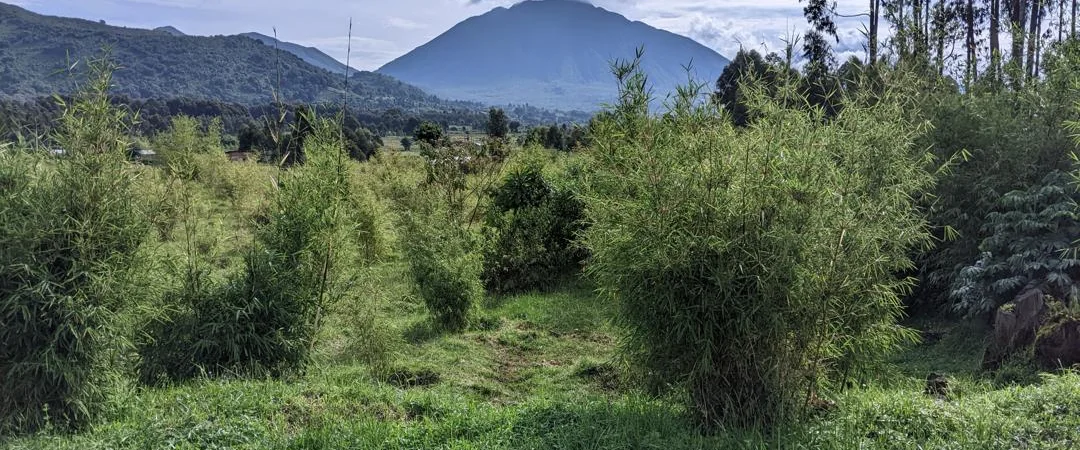
Growing the bamboo that feeds mountain gorillas.
A forest landscape restoration project delivered for the Rwanda Development Board and the African Wildlife Foundation. Not a carbon project: 27 hectares planted, and handed over in 2024.
Restoring what the gorillas eat.
Yushania alpina is the indigenous highland bamboo that makes up a major part of the diet of mountain gorillas, golden monkeys and other endemic species. Expanding the park meant restoring the plant those animals actually feed on, alongside indigenous trees and shrubs.
There was a problem at the start: too little Yushania alpina existed outside the park to propagate from in the usual way. The team ran field trips into the park to find seed or wildings, and built a nursery capable of holding 28,000 plants, with a hothouse, shade netting, water supply and sheds, on a site chosen with park rangers and Board officials.
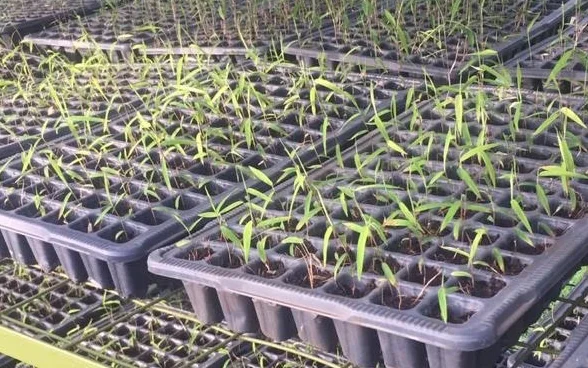
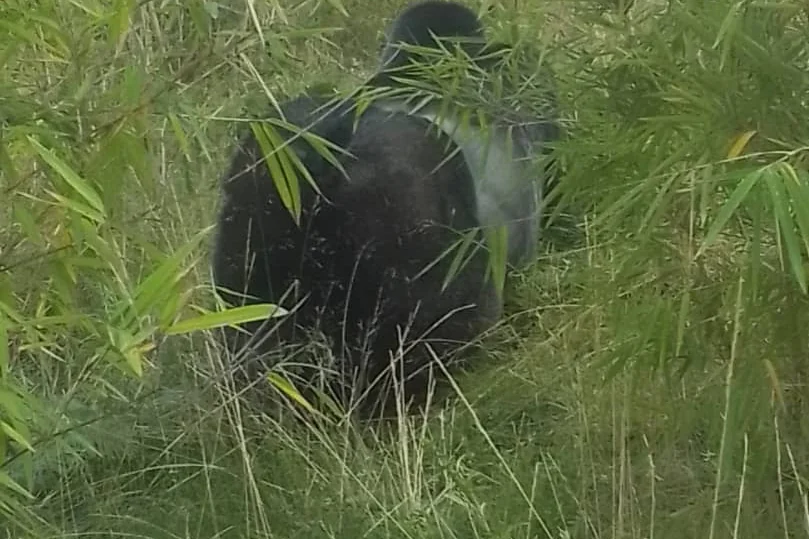
Cleared, planted, and handed over.
Non-native eucalyptus was cleared first. Bamboo was then planted on a three-by-four-meter grid, with quadrants left open for indigenous species, in two phases: 8,352 plants across ten hectares in March 2021, and the remaining seventeen hectares that October. Over three years of maintenance, the bamboo needed replacing at a rate of 0.5%.
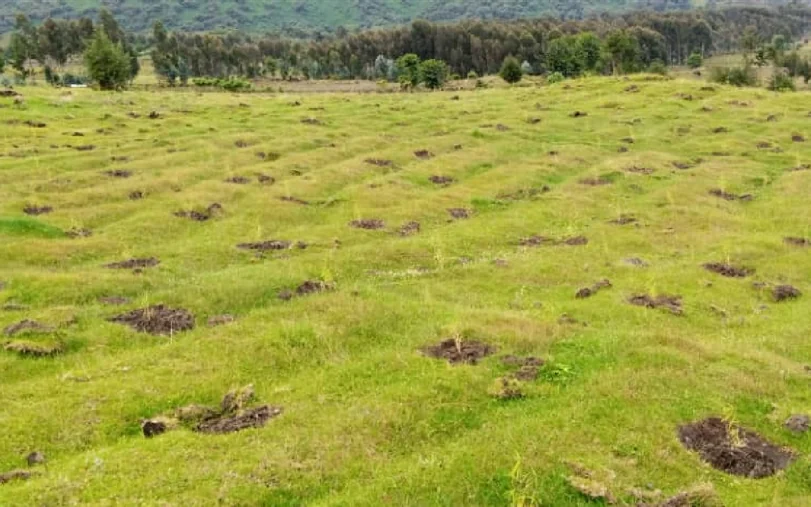 Before
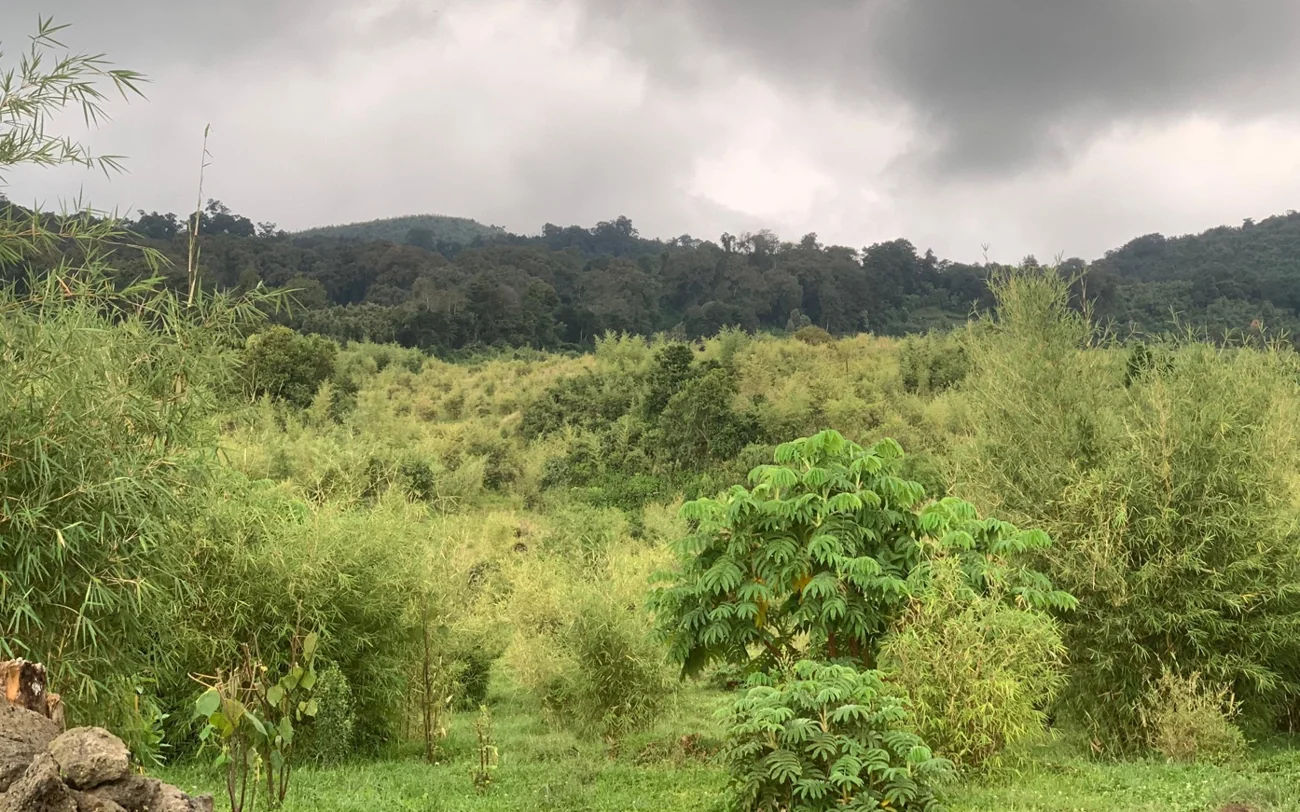 Established
The same restoration, prepared ground and established planting.
Habitat, and the work that made it.
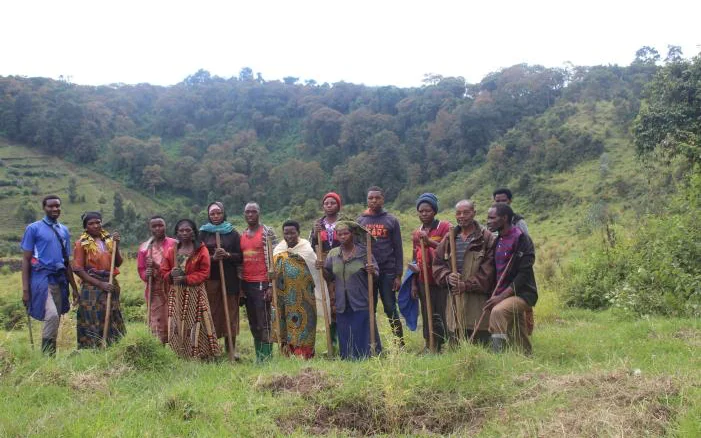
Sixty-seven people, and most of them women
Nursery work, land preparation, planting and maintenance employed 67 people from the communities around the park, 58% of them women and 32 of them young. Alongside them were sixteen nursery staff, a team leader and two permanent field guards. A local cooperative was engaged on wall repair, which cut buffalo damage and the human-wildlife conflict that comes with it.
A pilot the park can repeat
The restored area adds habitat for a species with roughly a thousand individuals left in the world, improving foraging and reducing the fragmentation that pushes gorillas into contact with people. It was designed as a pilot, so that the Board can extend the same method across future expansions of the park.