
The Eastern Cape Bamboo Forestry Project.
Eastern Cape, South Africa. Bamboo returning degraded farmland to permanent forests, conserving native thicket, and creating lasting rural jobs.
South Africa’s Eastern Cape has experienced more than a century of land degradation through the clearance of native vegetation for agriculture, overgrazing and prolonged drought. The resulting loss of productive land sits alongside persistent poverty and unemployment. The Eastern Cape Bamboo Forestry Project targets severely degraded farms where commercial agriculture is no longer economically viable, using bamboo to restore vegetation cover and generate carbon removals while creating long-term rural employment.
EcoPlanet has grown bamboo in the Eastern Cape since 2012. Building on that experience, the project plants Bambusa balcooa, a naturalized species of clumping bamboo, on land that EcoPlanet owns and manages directly. Planting is confined to previously cleared fields, while remaining native thicket is retained in conservation areas. As the bamboo grows, it captures atmospheric carbon and stores it in its woody stems and underground root and rhizome systems.
The project covers 3,500 hectares, including 1,000 hectares already planted across the 2023 to 2025 seasons and a further 2,500 hectares scheduled for planting between 2027 and 2029. Across the full area it is projected to deliver approximately 2.2 million net verified carbon units over its 30-year crediting period. Registered under Verra’s Verified Carbon Standard as project 3632, it advances eleven UN Sustainable Development Goals through its carbon removal, land restoration and rural employment activities. First issuance is expected in 2028.
3,500 ha available · 1,000 ha already planted · 2,500 ha scheduled for planting
Projected removals across the full project. Delivery subject to monitoring, verification and issuance. Full technical materials, delivery schedules and commercial terms are shared under NDA. All projected volumes are net VCUs, after the 12% VCS non-permanence buffer has been deducted.
Restoring farmland, growing an industry.
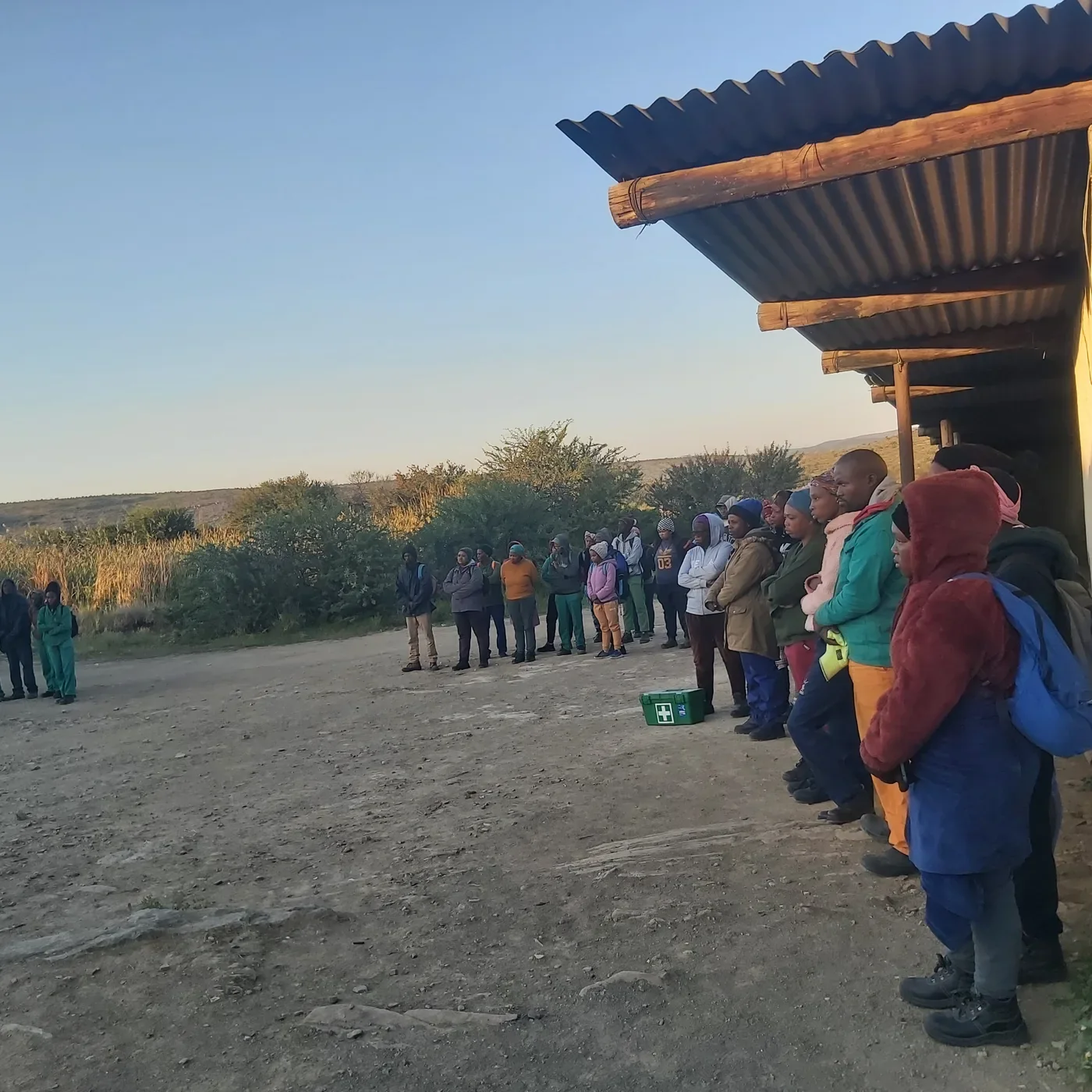
A century of overgrazing degraded these farms and hollowed out the rural employment they once carried. Replanting at this scale puts people back on the land: permanent field teams, nursery and propagation roles, and seasonal planting crews drawn from the surrounding communities. Unemployment in the town stood at 86% when we arrived.
Registered under the VCS
A registered Verra carbon project on a working forestry estate. Selective culm harvest maintains the standing carbon stock.
Freehold tenure
Private freehold land held by the project, so there are no lease renewals to negotiate and tenure risk is materially reduced.
Registration
Registered by Verra under VCS 3632.
Planting window
The remaining 2,500 hectares are planted over three seasons, 2027 to 2029.
Delivery profile
First issuance 2028, then biennial verification to 2038.
Permanence
Each planting delivers its removals within roughly ten years. Selective culm harvest maintains the standing carbon stock for the long term.
Carbon and fiber from the same land
At maturity the estate can sustainably supply roughly 350,000 tons of bamboo feedstock a year, so the same hectares that deliver carbon also carry a fiber crop.
Diligence pack
Full technical materials are available under NDA: the validated project design document, carbon accumulation model and monitoring plan.
Secure land and tenure
The project farms are freehold land owned and operated by EcoPlanet, bringing land ownership, implementation and long-term management under one organization. Partners work directly with the company responsible for planting, maintaining and monitoring their allocated hectares.
Proven delivery
EcoPlanet has grown bamboo in the Eastern Cape since 2012 and has planted 1,000 hectares under this project across the 2023 to 2025 seasons. With nursery and propagation operations on site, the project builds on local experience and established planting capacity, and provides 17 full-time positions and up to 185 seasonal positions. Partners can participate in hectares already growing, with first issuance expected in 2028.
Impact on the ground
Every farm we restore to productive use creates opportunities beyond the landscape itself. In communities facing high unemployment and limited access to training, our projects generate local jobs, develop practical skills and expand opportunities for women to participate and progress within our workforce. We also build local awareness of climate change and strengthen rural economies as sustained employment increases household incomes and local spending.
1,000 hectares are already in the ground, planted over three seasons.
2027 to 2029 plantings are the currently projected schedule.