
Spekboom restoration near Makhanda.
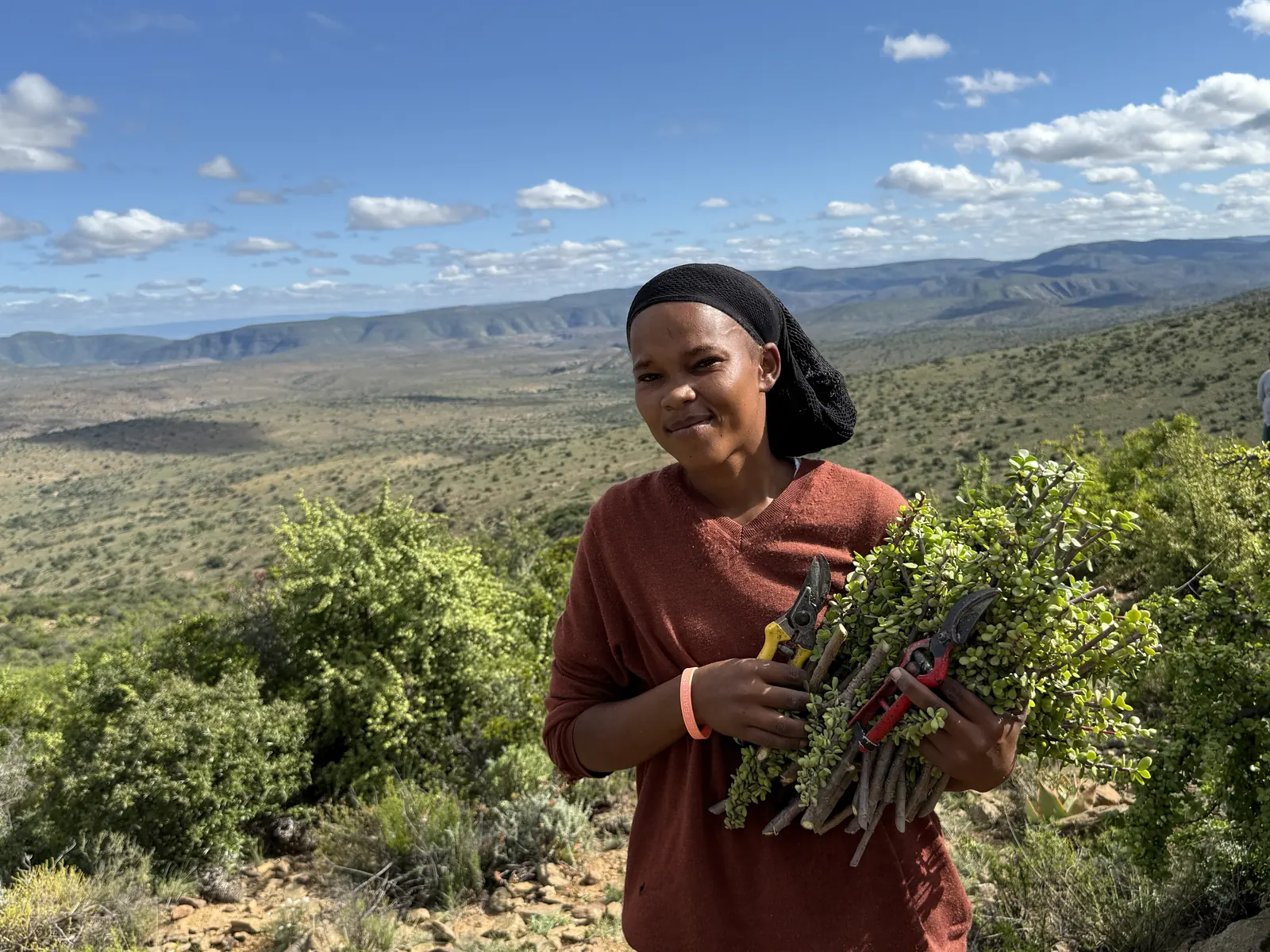
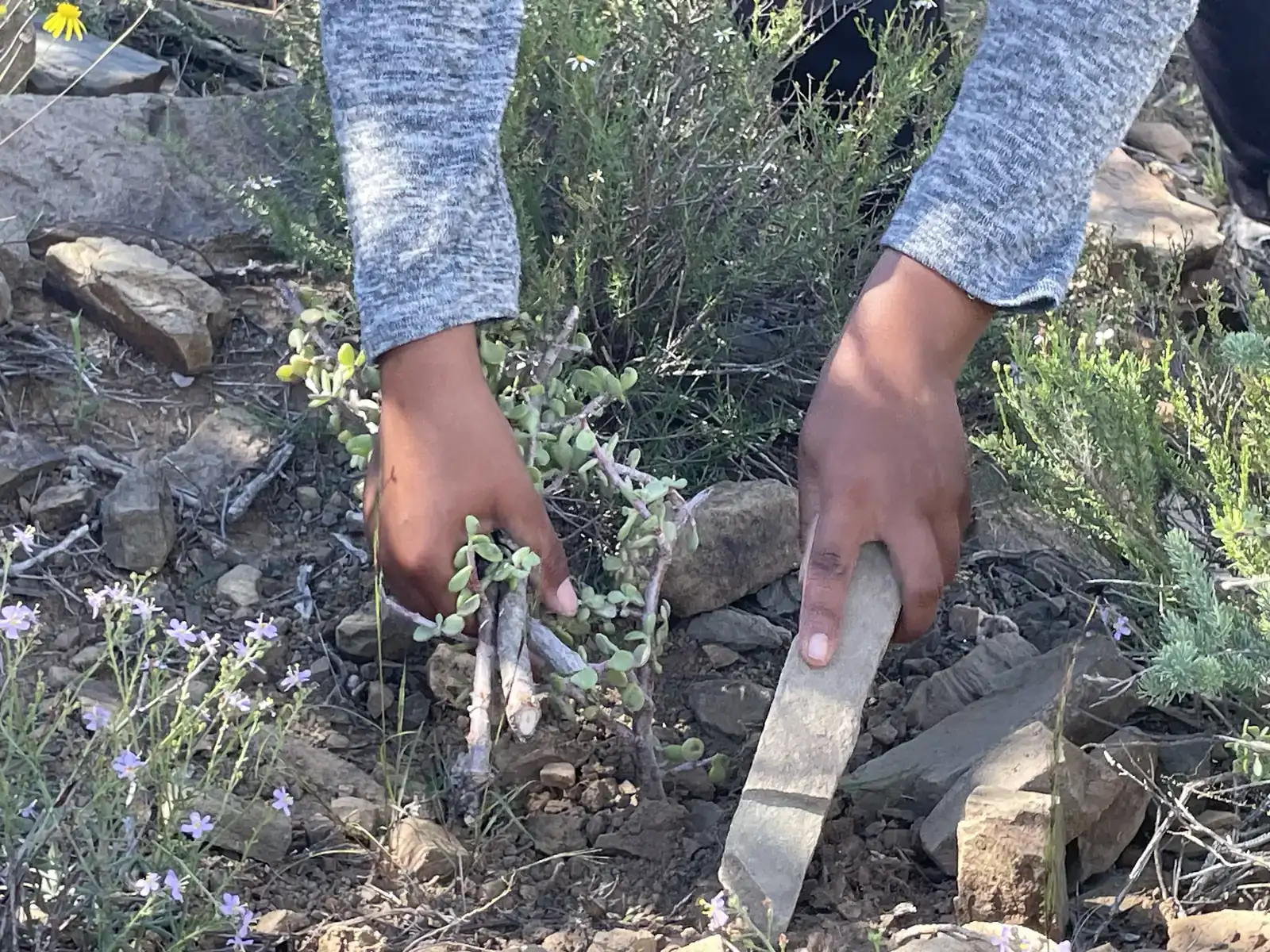
The Eastern Cape Restoration Project at Makhanda, registered with Verra as VCS 3627. Spekboom restoration of Albany thicket, with a community program built around the people who work it and the town beside it.
A smaller program, built around the workforce.
The program at Makhanda is smaller than at Sand River, and has stayed focused on two things: feeding the people who work the farm, and building skills that are useful beyond it. In 2024 that meant two cooked meals a week for 119 workers, vegetables from the farm’s own growhouse and field garden, school uniforms for the children of 82 workers, and training for individual staff.
Meals, gardens, uniforms and training.
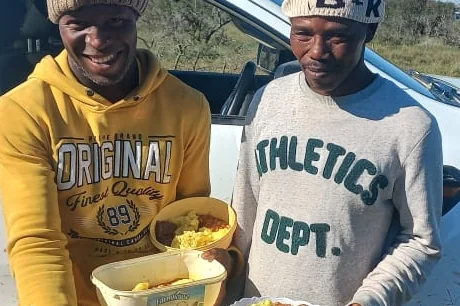
Two cooked meals a week, grown on site
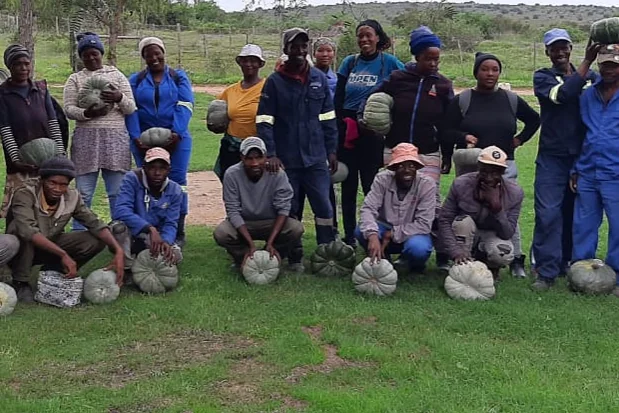
In 2024 the project supported 119 workers, 65% of them women, with two cooked meals each week. The meals were built from the farm’s own growhouse and field garden, and the produce left over went home with workers for their families.
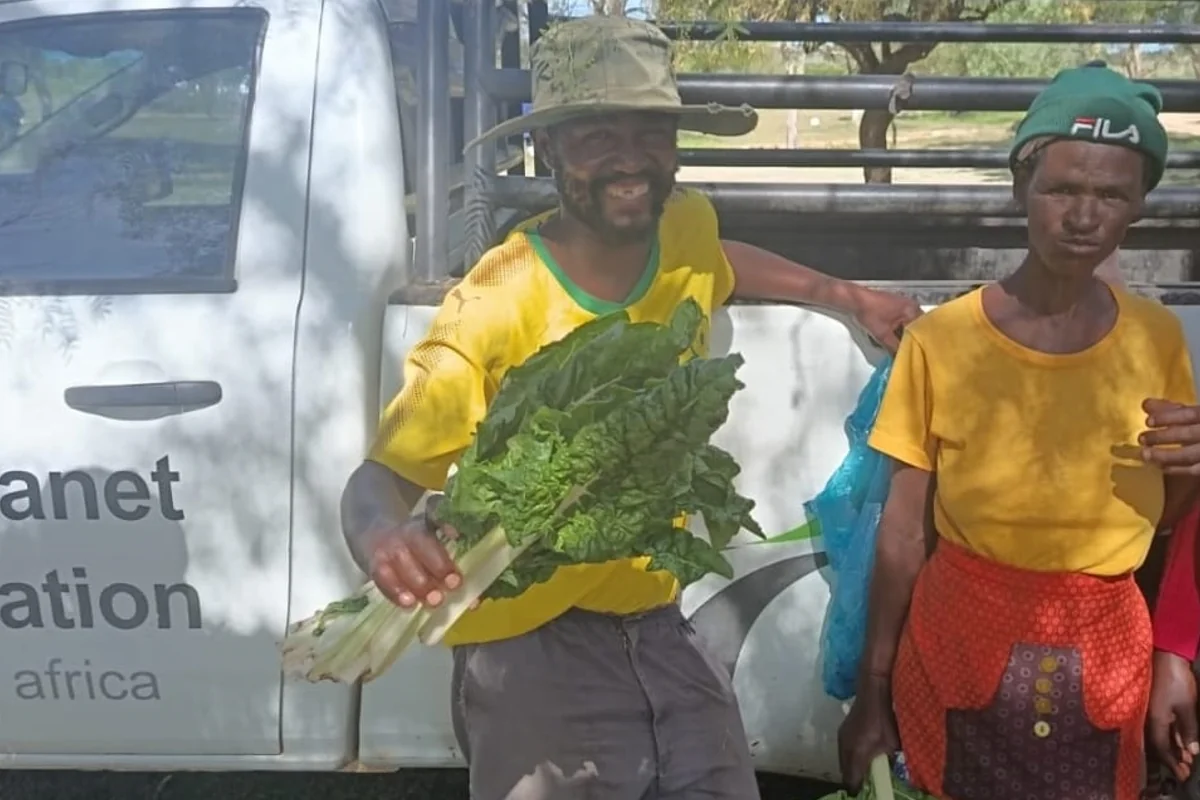
A growhouse, a field garden and poultry
Both the vegetable growhouse and the field garden ran through 2024, producing spinach, cauliflower, onions, carrots, pumpkins and butternut squash for the meal program and for workers’ households. Poultry is kept alongside them.
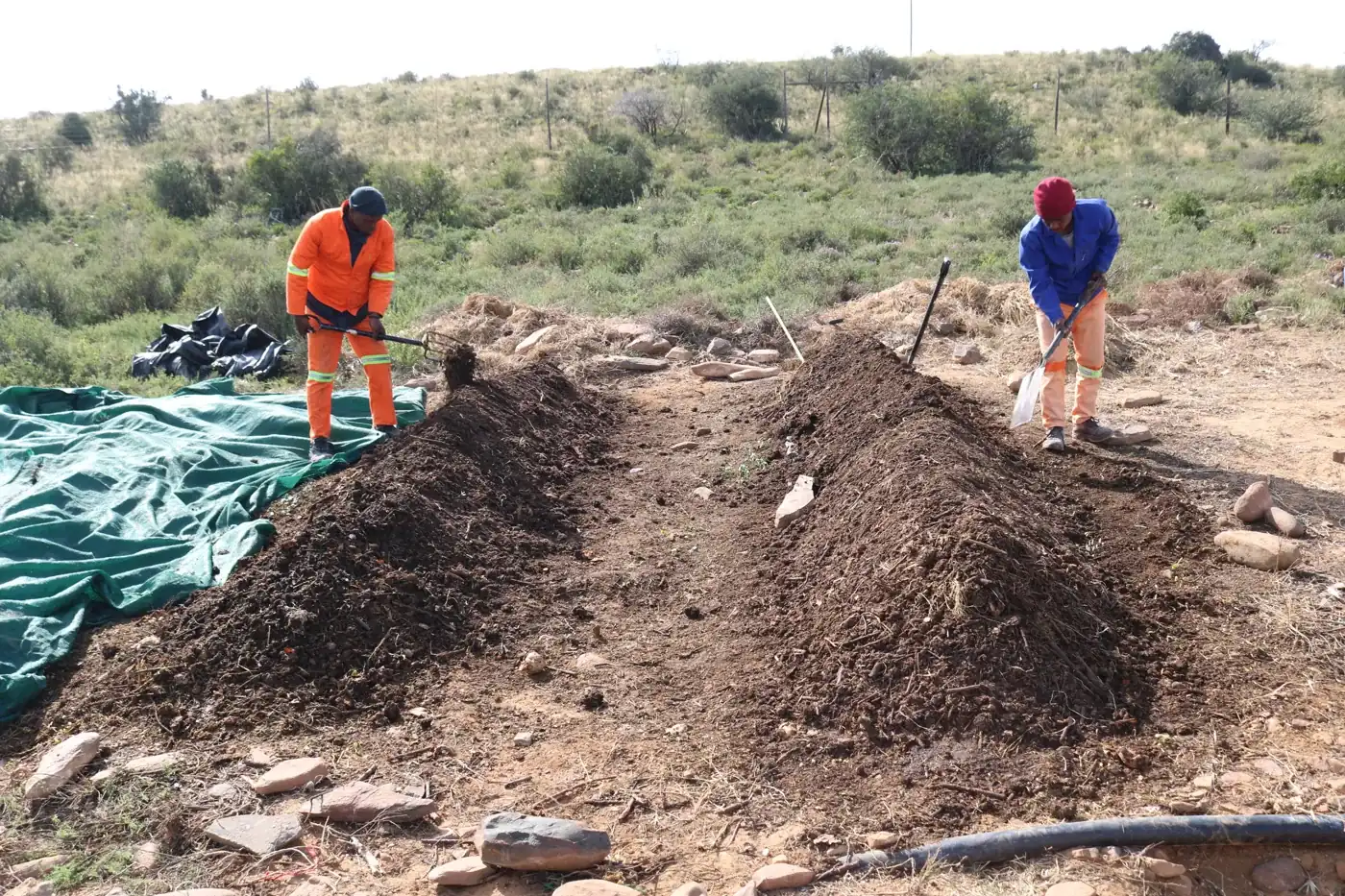
Organic waste, turned into compost
In July 2026, 24 residents were trained in health and safety and in composting for their own production. They now collect an estimated 850 kg of organic waste a week from the Makhanda area, composted on the farm.
A micro-bakery, in training In progress
Twenty women from Alexandria Township were identified for training in baking and basic business skills, with technical training beginning in August 2026. A venue for the enterprise is being identified with the local ward councilor.
Vocational skills, chosen locally In progress
Rather than guess at what training would be useful, the team asked. Neighboring farmers and the local farmers association identified gaps in driving, fencing and welding, and courses are being procured against those gaps.
School uniforms, and a team to play for
In December 2024, 82 workers received school uniforms for their children. The project also funded the farm soccer team’s kit, match fees and transport through a season that reached the semifinals.
Eastern Cape Restoration Project, Makhanda.
Spekboom restoration of Albany subtropical thicket on the Hilton farm, the earlier of the two Eastern Cape thicket projects. Registered with Verra as VCS 3627 and fully committed.
Project Details →